Manufacturing businesses rely on energy to keep production moving. From machinery and automation to compressed air, refrigeration, lighting, heating and cooling, electricity can influence almost every stage of a modern manufacturing operation.
As energy costs, sustainability requirements and operational pressures continue to shape business decisions, manufacturers are looking more closely at how electricity is generated, purchased, stored and consumed.
This is where battery storage for manufacturing facilities can become an important part of a wider energy strategy.
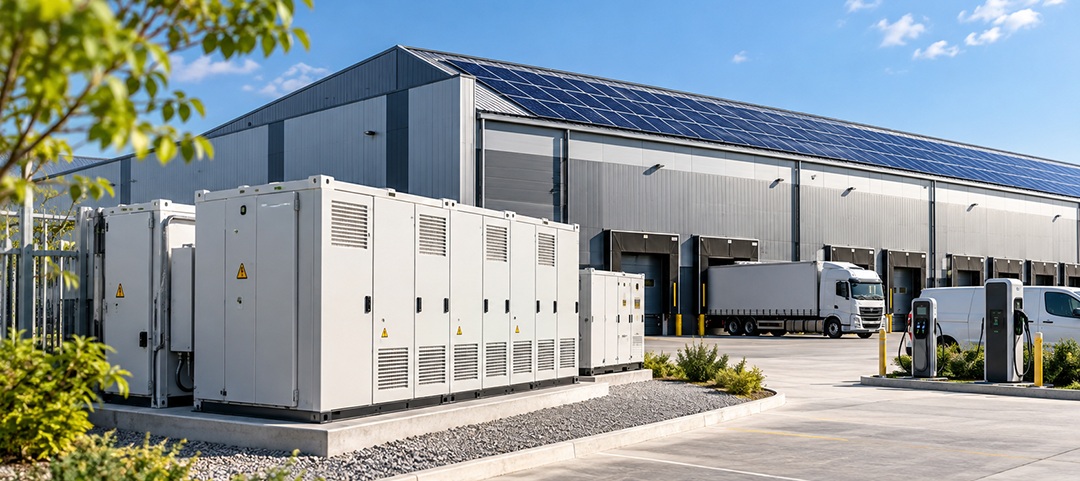
A commercial battery energy storage system can allow manufacturers to store electricity and use it when it is most useful to the business. Depending on the design and operating strategy, storage can help manage periods of high demand, increase the use of renewable electricity, support electric vehicle charging and provide additional resilience for selected critical loads.
Close Cooper Renewables provides commercial and industrial battery storage solutions designed around the requirements of individual sites. Its C&I storage systems can support applications including peak demand management, solar integration, EV charging and backup.
For manufacturers, the opportunity is not simply about installing a battery. It is about creating an energy system that works more effectively around the way production actually operates.
Why Energy Flexibility Matters in Manufacturing
Manufacturing facilities rarely have simple energy profiles.
A production line may consume relatively little electricity when inactive but require substantial power when machinery starts operating. Several production processes may also run simultaneously, creating significant increases in site demand.
Other equipment can add to the overall load.
Compressed air systems, extraction equipment, refrigeration, pumps, conveyors, heating and cooling can all contribute to a factory’s electricity consumption.
The result is an energy profile that can change considerably throughout the day.
For manufacturers, understanding these patterns is important because the timing of electricity consumption can be just as significant as the total amount of electricity used.
Battery storage for manufacturing facilities can provide greater flexibility by allowing electricity to be stored at one point and used later when demand increases.
This can help manufacturers take a more active approach to managing energy rather than simply purchasing electricity whenever production requires it.
How Battery Storage Can Support Production
A battery energy storage system stores electricity for later use.
The electricity can potentially come from several sources, including commercial solar PV or the grid during suitable lower cost periods.
The stored energy can then be discharged when it provides the greatest operational or financial value.
For a manufacturer, this could mean supporting production during periods of high electricity demand.
It could also mean storing surplus solar electricity generated during the day and using it later when production continues but solar generation has fallen.
The exact strategy depends on the facility’s electricity consumption, tariff arrangements, production schedule, renewable generation and business objectives.
The important consideration is that the battery should be designed around the manufacturing operation rather than treated as a standard product that works the same way at every site.
Managing Peaks in Manufacturing Demand
Peak demand can be a significant consideration for energy intensive manufacturers.
A factory may operate at a relatively consistent level for much of the day but experience short periods when electricity demand rises sharply.
This can happen when several machines start at the same time, additional production lines become active or energy intensive processes operate simultaneously.
Depending on the site’s electricity arrangements, these periods of high demand can have a meaningful effect on energy costs.
Battery storage can potentially help manage these peaks by supplying stored electricity during suitable periods.
This approach is commonly referred to as peak shaving.
Close Cooper Renewables specifically highlights demand smoothing and peak charge reduction as applications for its C&I battery storage solutions.
The potential financial benefit will depend on the individual site’s tariff structure and consumption profile, so manufacturers should analyse actual energy data before deciding how much storage is appropriate.
Making Better Use of Manufacturing Solar
Many manufacturing facilities have large roof areas that can be used for solar PV.
This provides an opportunity to generate renewable electricity directly at the site where it is needed.
However, solar generation and manufacturing demand do not always match perfectly.
A factory may generate substantial solar electricity during the middle of the day while some production processes are operating at a lower level. At other times, production may continue after solar generation has declined.
Without storage, surplus renewable electricity may need to be exported rather than being used later on site.
Battery storage can change this dynamic.
Surplus solar electricity can potentially be stored and then discharged when manufacturing demand increases.
This can help manufacturers make greater use of their own renewable generation and reduce the amount of electricity that needs to be purchased from the grid.
Close Cooper Renewables provides integrated commercial solar and battery storage solutions designed to connect renewable generation with wider business energy requirements.
For manufacturers investing in solar, adding storage can therefore be worth considering as part of the original energy strategy rather than as an entirely separate project.
Supporting Different Production Patterns
Not every manufacturing business operates in the same way.
Some factories operate a standard daytime shift. Others run two or three shifts, while certain facilities operate continuously.
Production schedules can also change depending on customer demand, seasonal activity, maintenance requirements and business growth.
This makes flexibility particularly important.
A battery system can potentially support different energy strategies according to the operating profile of the facility.
For example, a site with strong daytime solar generation could store surplus electricity for later production. A factory with multiple shifts could use stored energy during periods when solar generation is lower. A business with significant peak demand could focus more heavily on demand management.
The best approach depends on the site’s actual operating data.
This is why professional energy assessment should come before battery selection.
Improving the Use of Energy Data
Modern manufacturing businesses already generate significant amounts of operational data.
Production systems monitor machinery. Building management systems monitor facilities. Energy meters provide information about electricity consumption.
Bringing this information together can provide a clearer understanding of how energy relates to production.
Commercial energy management systems can help monitor energy flows and coordinate different technologies.
Close Cooper Renewables’ C&I storage solutions incorporate intelligent energy management that can consider site loads, weather and tariffs when controlling battery operation. The system can also support time of use schedules, peak shaving limits and backup priorities.
This means battery storage can become part of a broader energy management strategy.
Rather than simply charging and discharging according to a fixed schedule, the system can respond to changing conditions and the requirements established for the site.
For manufacturers, this can provide a more structured way to connect energy management with operational planning.
Supporting Electric Vehicle Charging
Manufacturing sites are also increasingly adopting electric vehicles.
These may include company cars, commercial vans, forklifts or larger vehicle fleets used to move products and materials.
As EV adoption grows, charging infrastructure introduces additional electricity demand.
If multiple vehicles charge simultaneously, the resulting load can coincide with existing manufacturing demand.
This creates an important planning consideration.
Battery storage can potentially provide additional flexibility by supporting charging demand during suitable periods. Where solar PV is installed, renewable electricity can also contribute towards EV charging during daylight hours.
Close Cooper Renewables identifies EV charging as one of the applications supported by its C&I battery storage solutions, including integrated solar storage charging configurations.
For manufacturers planning to increase their use of electric vehicles, considering storage, charging and solar together can therefore help create a more coordinated energy strategy.
Creating Greater Energy Resilience
For a manufacturing business, an unexpected power interruption can create operational problems.
Production equipment may stop. Processes may need to be restarted. Materials could potentially be affected, while delivery schedules and productivity may also be disrupted.
Battery storage can form part of a wider resilience strategy where the system is specifically designed to provide backup for suitable loads.
However, manufacturers should not assume that every commercial battery installation will automatically provide whole site backup.
Backup capability depends on the system design, electrical infrastructure, battery configuration and the loads that the business wants to protect.
This makes it important to identify critical equipment during the planning stage.
For some manufacturers, maintaining power to control systems and essential equipment may be the priority. For others, refrigeration, security, IT or specific production processes may be more important.
Close Cooper Renewables includes backup priorities among the capabilities of its commercial and industrial storage solutions.
Choosing the Right Battery Capacity
Selecting the right battery size is one of the most important parts of a manufacturing storage project.
A larger battery is not automatically a better investment.
The appropriate capacity depends on the site’s energy consumption, peak demand, production schedule, solar generation, tariff structure and intended use of the storage system.
Power output also matters.
A battery’s energy capacity, normally measured in kWh, determines how much electricity it can store. Its power rating, measured in kW, determines how quickly that energy can be delivered.
A manufacturing facility with substantial short duration peaks may therefore have different requirements from a site that needs to store solar energy for several hours.
Historical energy data can help identify these patterns.
A detailed assessment can then help determine the combination of battery capacity and power output that is appropriate for the site’s objectives.
Working With Existing Electrical Infrastructure
Manufacturing facilities often have complex electrical systems.
A factory may have been expanded several times, with additional machinery, production lines, solar panels, EV chargers and other equipment added over the years.
Installing battery storage therefore requires careful consideration of the existing electrical infrastructure.
The proposed system needs to work appropriately with the site’s distribution equipment, grid connection, renewable generation and major electrical loads.
This is another reason why commercial storage should be treated as an energy infrastructure project rather than simply a battery purchase.
Close Cooper Renewables provides C&I storage solutions that can be integrated across different site configurations, including grid tied systems, microgrids and solar storage charging hubs.
Preparing for Future Manufacturing Expansion
Manufacturing businesses rarely stand still.
Production capacity may increase. New machinery may be introduced. Additional shifts may be added. Electric vehicle fleets may grow, while further solar generation could be installed.
All of these changes can influence future electricity requirements.
When planning battery storage for manufacturing facilities, it can therefore be useful to consider future energy requirements alongside current consumption.
That does not necessarily mean installing the largest possible battery immediately.
Instead, businesses can consider whether the initial system can accommodate future changes or whether additional storage, solar or EV charging could be introduced later.
Taking this longer term view can help manufacturers avoid designing an energy system that only works for today’s production requirements.
Combining Solar, Storage and Energy Management
The greatest opportunity often comes from connecting several energy technologies.
Solar PV generates renewable electricity.
Battery storage stores electricity for later use.
EV charging creates additional electrical demand.
Manufacturing equipment consumes electricity according to production requirements.
An energy management system can help coordinate these different elements.
Close Cooper Renewables’ commercial energy management solutions are designed to help businesses understand consumption and coordinate technologies such as solar PV, battery storage and EV charging.
When these systems are planned together, manufacturers can develop a more connected approach to energy.
This can help the business make decisions based on actual energy conditions rather than treating each technology as a separate installation.
Why Choose Close Cooper Renewables?
Manufacturing facilities require energy solutions that reflect the reality of production.
A battery system designed for a warehouse may not be appropriate for a factory with heavy machinery, multiple shifts and substantial electrical demand.
Close Cooper Renewables works with commercial and industrial customers to develop renewable energy solutions around their individual requirements. Its services include solar PV, battery storage, C&I storage, EV charging and energy management, supported by ongoing service and maintenance.
This broader capability means manufacturers can consider several parts of their energy infrastructure together.
Whether a business is looking to add storage to an existing solar installation, reduce peak demand, prepare for EV charging or develop a more integrated energy strategy, the starting point should be a clear understanding of the site’s requirements.
A More Flexible Future for Manufacturing Energy
Energy is becoming an increasingly strategic consideration for UK manufacturers.
Production depends on reliable electricity, while businesses are also looking for better ways to control costs, increase renewable energy use and prepare for changing operational requirements.
Battery storage for manufacturing facilities can provide an important layer of flexibility.
It can help manufacturers store surplus renewable electricity, manage periods of high demand, support EV charging and contribute to resilience strategies where appropriately designed.
But the battery itself is only one part of the solution.
The most effective approach is to understand how electricity moves through the manufacturing facility and then design storage, solar generation, energy management and other technologies around that reality.
For manufacturers, this can turn energy from a fixed operating expense into something that can be managed more strategically.
Start With Your Manufacturing Energy Profile
Every manufacturing facility has its own energy characteristics.
Before investing in battery storage, businesses should understand their production schedules, electricity consumption, peak demand, solar generation and future energy requirements.
This information provides the foundation for deciding whether storage is suitable and how the system should be configured.
Close Cooper Renewables can help manufacturers explore how battery storage for manufacturing facilities can work alongside solar PV, energy management and EV charging to create a more flexible energy strategy.
The objective is simple: design an energy system that supports the way your manufacturing business operates today while giving it greater flexibility for the future.