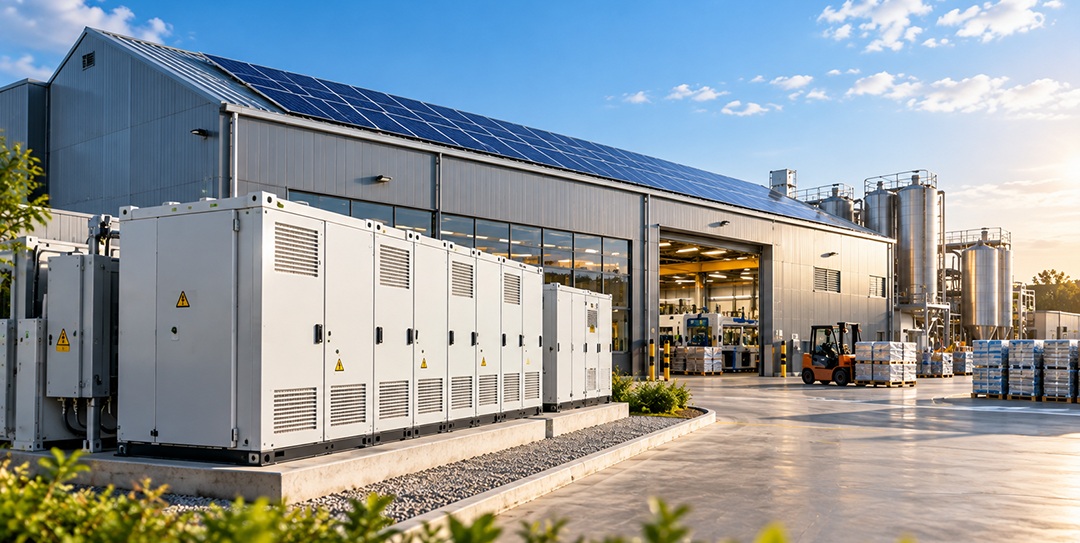
For many businesses, electricity is still treated as something that simply has to be purchased when it is needed. Energy comes into the building, equipment uses it and the business pays the bill. While this model is straightforward, it gives organisations relatively little control over one of their most important operating costs.
That is changing. Battery storage for businesses is giving organisations a practical way to take a more active role in how electricity is generated, purchased, stored and consumed. Instead of using energy only when it is available or when the grid supplies it, businesses can store electricity and make better use of it when it provides the greatest financial or operational value.
Close Cooper Renewables helps businesses across the UK explore how battery storage can become part of a wider energy strategy. Rather than treating a battery as simply another piece of equipment, we look at how storage can work alongside solar PV, existing electrical infrastructure, energy management systems and future business requirements.
Why Energy Flexibility Matters to Businesses
The way businesses use electricity is rarely consistent throughout the day. A warehouse may have high energy consumption during operating hours. A manufacturing facility may experience substantial demand when machinery is running. An office may have a different profile, with demand concentrated around working hours.
At the same time, electricity costs and renewable generation can vary throughout the day.
This creates an opportunity.
Battery storage gives businesses the flexibility to decide when electricity is stored and when it is used. Depending on the system design and energy strategy, batteries can charge using surplus renewable generation or electricity purchased at a more favourable time, then discharge when the business needs additional power.
Close Cooper Renewables’ commercial and industrial battery storage solutions are designed around this principle, helping businesses manage demand, support renewable generation and improve the flexibility of their energy systems.
What Does Battery Storage for Businesses Actually Do?
A commercial battery storage system stores electrical energy so that it can be used later. The energy may come from solar panels, the grid during lower cost periods or other compatible generation sources.
The real value comes from controlling when that stored energy is used.
For example, a business with rooftop solar may generate more electricity during the middle of the day than it needs at that particular moment. Instead of sending all of that surplus electricity back to the grid, a battery can store some of it for later use.
Similarly, where a business has suitable tariff arrangements, a battery may be charged during periods when electricity is cheaper and discharged when the business would otherwise need to draw more expensive electricity from the grid.
This turns storage into an active energy management tool rather than simply an emergency backup system.
Make More of Your Commercial Solar Investment
Solar PV and battery storage can work particularly well together.
Solar generation is naturally linked to daylight hours but business energy consumption does not always follow the same pattern. A company may generate substantial electricity during the afternoon but continue to require power during the evening or at other times when solar production has reduced.
Without storage, surplus generation may be exported.
With battery storage, businesses have another option. Excess solar electricity can be captured and retained for later use, increasing the amount of generated electricity that can potentially be consumed on site.
This can make a commercial solar investment more productive by allowing businesses to use more of their own renewable generation rather than relying on the grid outside peak solar production periods.
Close Cooper Renewables already combines commercial solar and battery storage as part of tailored renewable energy solutions for businesses seeking greater control over their energy use.
Reducing Exposure to Peak Demand
One of the important commercial applications of battery storage is managing periods of high electricity demand.
A business may have relatively moderate consumption for much of the day but experience short periods when demand increases significantly. Depending on the site’s tariff structure and electricity arrangements, these periods can have a noticeable impact on overall energy costs.
A correctly designed battery system can discharge stored energy during appropriate periods, helping reduce the amount of electricity the site needs to draw from the grid at that time.
This is often referred to as peak shaving.
For businesses with significant or variable energy demand, the ability to manage these peaks can form an important part of a wider energy cost reduction strategy.
Close Cooper Renewables’ C&I storage solutions are specifically designed to help smooth demand and reduce peak charges, while also supporting other commercial loads such as EV charging and critical systems.
Battery Storage Can Support Business Resilience
Cost reduction is important but it is not the only reason businesses are considering battery storage.
Electricity interruptions can cause serious disruption. Depending on the nature of the business, a loss of power could affect machinery, refrigeration, IT systems, security equipment, production processes or customer operations.
Battery storage can provide an additional layer of energy resilience when designed with appropriate backup functionality and site requirements in mind.
This does not mean every battery installation will provide whole site backup. The outcome depends on the system, electrical infrastructure, critical loads and project design.
However, for businesses where continuity of supply is particularly important, storage can form part of a more resilient energy strategy.
Close Cooper Renewables’ commercial and industrial solutions can be configured for applications where backup and operational continuity are important considerations.
Supporting the Growth of Electric Vehicles
The transition towards electric vehicles is creating another reason for businesses to think carefully about energy capacity.
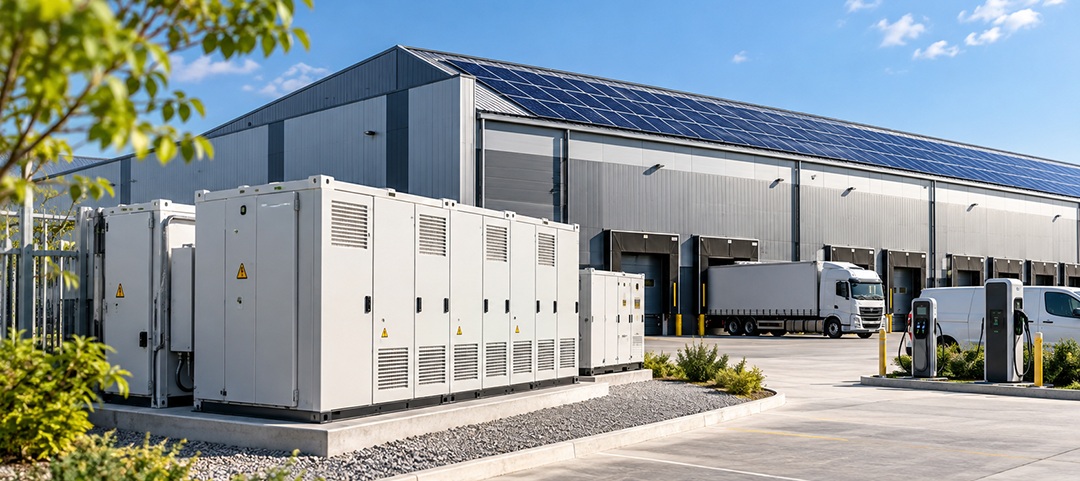
Companies with electric vans, cars, forklifts or other commercial vehicles may introduce substantial additional electricity demand as charging infrastructure expands.
Simply adding more EV chargers can place additional pressure on a site’s electrical supply, particularly when several vehicles need to charge at the same time.
Battery storage can help businesses manage this demand more intelligently.
Instead of relying entirely on the grid connection to provide every unit of electricity required for charging at peak times, stored energy can potentially support charging loads when appropriate.
This creates a more flexible energy system and can be particularly useful for warehouses, logistics operations, commercial fleets and businesses planning to increase their use of electric vehicles.
Intelligent Energy Management Makes Storage More Effective
Modern battery storage is about more than charging and discharging a battery manually.
Intelligent energy management systems can monitor information such as site demand, renewable generation, weather conditions and electricity tariffs. The system can then use this information to determine when the battery should charge or discharge according to the agreed energy strategy.
Close Cooper Renewables’ C&I battery storage solutions incorporate smart energy management capabilities designed to forecast site loads, weather and tariffs and automate battery dispatch. They can also support scheduling, peak shaving and backup priorities.
This is an important distinction for businesses.
The goal should not simply be to install the largest battery possible. The goal is to create a system that responds intelligently to how the business actually uses energy.
Choosing the Right Battery System for Your Business
There is no universal battery storage solution that works equally well for every business.
A suitable system needs to take account of the site’s electricity consumption, operating hours, existing solar generation, electrical infrastructure, tariff arrangements and future plans.
The physical characteristics of the site also matter. Available space, electrical connections, access requirements, safety considerations and installation conditions all need to be assessed before a project moves forward.
System sizing is particularly important.
A battery that is too small may not provide enough capacity to achieve the desired energy management objectives. A system that is unnecessarily large may involve additional investment without delivering proportional commercial benefits.
This is why professional assessment and design are essential.
Battery Storage Should Be Part of a Wider Energy Strategy
The strongest commercial battery projects are rarely considered in isolation.
For some businesses, the priority may be reducing peak demand. For others, it may be maximising solar self consumption. Another organisation may be preparing for increased EV charging demand or looking to improve resilience.
Battery storage can potentially support several of these objectives at the same time.
This is why it is worth looking at the entire energy picture before deciding what system to install.
Existing solar PV, future solar generation, EV charging, energy management, grid capacity and changing business requirements can all influence the right solution.
Close Cooper Renewables takes this wider approach when developing commercial renewable energy projects, providing assessment, system design, installation and ongoing support around the needs of the individual business.
Which Businesses Could Benefit?
Battery storage for businesses can be relevant across a wide range of commercial and industrial environments.
Manufacturers can use storage to help manage substantial and variable energy demand. Warehouses and logistics businesses can use it alongside solar generation and EV charging. Retail sites can explore ways to manage electricity consumption and improve energy efficiency. Offices may use storage as part of a broader renewable energy strategy.
Agricultural businesses can also benefit from the ability to store renewable electricity and use it when required.
The important point is that battery storage should be assessed against the actual energy profile of the business rather than simply following a standard installation model.
Why Professional Installation Matters
Commercial battery storage is a significant energy infrastructure investment. Getting the design and installation right from the beginning can make a considerable difference to long term performance.
The process should include an assessment of energy consumption, consideration of existing electrical infrastructure, appropriate battery sizing, system integration and careful installation and commissioning.
Ongoing monitoring and support can also help businesses understand how their system is performing over time.
Close Cooper Renewables provides tailored commercial and industrial battery storage solutions designed around the requirements of individual sites. Its approach includes system design, renewable energy integration, installation and ongoing support, helping businesses move from an initial energy challenge towards a practical long term solution.
Building a More Flexible Energy Future
Energy management is becoming increasingly important for businesses across the UK.
Companies are looking for ways to control operating costs, make better use of renewable energy, prepare for EV adoption and improve resilience. Battery storage can bring these priorities together within one flexible energy system.
The key is to approach the technology from a business perspective.
Rather than asking how much battery storage a company can install, it makes more sense to ask what the business is trying to achieve with its energy. Once those objectives are understood, the right combination of storage, solar, energy management and other technologies becomes much easier to determine.
Battery storage for businesses is therefore not simply about storing electricity. It is about having greater control over when energy is generated, purchased and consumed.
Talk to Close Cooper Renewables
The right battery storage system can help a business make better use of renewable energy, manage periods of high demand, support EV charging and build greater resilience into its energy infrastructure.
Close Cooper Renewables works with businesses to develop renewable energy and battery storage solutions based on their operational requirements and long term objectives. With commercial and industrial storage capabilities covering applications including solar integration, peak demand management, EV charging and backup, the focus is on creating an energy system that works for the business rather than simply installing equipment.
If your business is considering battery storage, the first step is understanding how your site currently uses energy and where storage could create the greatest value. A properly designed solution can then become part of a wider strategy for reducing costs, improving flexibility and preparing your business for the changing energy landscape.